Lost Pet? The Hour-by-Hour Action Plan That Works (2026)
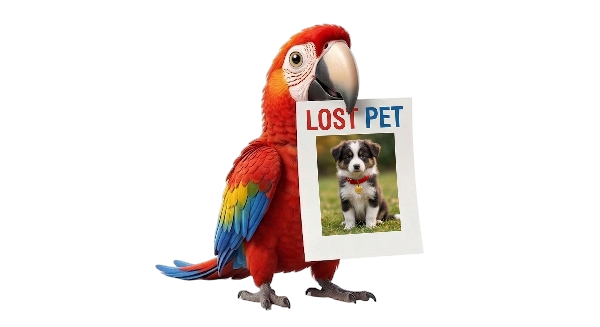
The worst moment in pet ownership has a script, and knowing it beats improvising it. Most lost pets who are recovered are found close to home and early — which means the first hours matter enormously, and the difference between a panicked search and a methodical one is often the difference in outcome.
Here’s the plan, hour by hour. Read it once now, while your pet is asleep next to you; it works far better as preparation than as a mid-crisis search result.
First: Stop and Think Like Your Species
Dogs and cats get lost differently, and the wrong search method actively hurts.
Cats — especially indoor cats — don’t run; they hide. A displaced cat typically goes silent and stationary within a 150-meter radius, under a deck, in a garage, inside dense shrubs. She will likely not come when called, even to you, because a terrified cat’s strategy is stillness.
- Search low and quiet: flashlight at ground level into every void, even at midday.
- Search at dusk and pre-dawn, when the world is quiet — bring treats to shake and speak softly.
- Open a garage or shed door she might have been shut inside — the #1 “miracle return” explanation.
- Put her litter box and your unwashed t-shirt outside; familiar scent anchors the territory.
Dogs move. A spooked dog can cover kilometers, usually along familiar walk routes or following other dogs and people.
- Walk (don’t drive first) the usual walk routes, calling in your happy voice — a dog who bolted from fright reads your panic as danger.
- Never chase. If you spot him, stop, crouch sideways, open your arms, call cheerfully — or run away playfully. Chasing a scared dog extends the search by days.
- Bring the leash, the treat bag with its familiar crinkle, and the squeaky toy.
Hours 2–6: Cast the Net
Once the immediate physical search comes up empty, parallelize:
- One great photo + facts. Clear recent photo, name, breed/description, distinguishing marks, last-seen location and time, your phone number. Write it once; reuse it everywhere.
- Digital sweep: local lost-and-found pet groups, neighborhood apps, community boards — post in all of them with the same photo and text. Ask household members to share; reach scales fast and reunions via social groups are extremely common.
- Poster the radius: A5/A4 posters at eye level — intersections, bus stops, vet clinics, pet shops, cafés — within 1 km for cats, 3–5 km for dogs. Big photo, huge phone number, minimal text. (PokiPaw’s Lost Pet Hub generates a shareable poster from your pet’s profile in seconds — one tap from the same app where sightings from the community collect.)
- Tell the mail carrier and delivery drivers. They cover your neighborhood streets daily and are famously effective spotters.
Day 1: The Institutional Layer
- Call every shelter and rescue within 10 km. File a formal lost report; visit in person within 48 hours because your description and their intake description of the same animal often don’t match. Repeat visits every 2–3 days — hold periods are short.
- Call vet clinics and emergency hospitals — injured strays get brought to vets, not shelters.
- Lead with the microchip number. This is the moment the chip was made for; make sure the shelters have the number and your registration is current. If you’re fuzzy on how the chip system works — or whether your registration is stale — our microchip guide is the 10-minute audit to do today, ideally long before you need it.
- Report to the chip registry — many registries broadcast alerts to clinics and shelters in the area.
The Mistakes That Cost Reunions
- Assuming “she’ll come back on her own.” Some do. Planning on it burns the highest-value search hours.
- Chasing. Covered above; worth repeating. It’s the single most common dog-search error.
- Search parties for cats. Six loud humans crashing through shrubs push a hiding cat deeper. Cats: one or two quiet searchers.
- Vague posters. “REWARD, small dog lost” with a blurry photo helps nobody. Photo, location, phone — big.
- Going silent after week one. Recovery stories at week three and beyond are common — they belong to the owners who kept refreshing posts and revisiting shelters. Log every sighting report with time and place; sightings plotted over days reveal a pattern and shrink the search area.
- Ignoring scams. “I have your pet, send money first” callers exist wherever reward posters do. Ask for a photo with today’s newspaper equivalent — any refusal to video-call or describe an unpublished detail is your answer.
When You’re Reunited
Vet check within a few days (scrapes, ticks, dehydration, whatever a week outside involved), quietly resume routine, and then convert the scare into infrastructure: chip registration audited, collar tag current, recent photos on your phone at all times, and your pet’s full identity — photos, chip number, medical records — in an app you’ll have with you wherever the next escape happens. In PokiPaw, marking your pet found closes the loop, and the whole kit — poster, sightings, records — stays ready, hopefully forever unused.
The One-Paragraph Version
Search correctly for your species in hour one (cats: close, low, quiet; dogs: routes, happy voice, no chasing). Photo + posts + posters by hour six. Shelters, vets, and the chip number on day one. Then persistence on a 2–3 day cycle until the reunion — which, for prepared owners, is the most common ending by far.
Download PokiPaw so your pet’s photos, chip number, and lost-pet toolkit are ready before the worst day — and a shareable poster is one tap away if it ever comes.
Ready to simplify your pet care?
Join thousands of pet owners using PokiPaw to track health, expenses, and daily routines.
Try PokiPaw Free